

Current team
I was raised in Woodstock, Connecticut, on the ancestral homelands of Nipmuc peoples, including the Wabbaquasset community, whose relationships with this land long predate English colonization and continue today. I now live, teach, and conduct my research in amiskwacîwâskahikan (Edmonton), on Treaty 6 territory, a traditional gathering place for diverse Indigenous peoples and home to Métis communities.
My own journey, from the United States, to Scotland, to Canada, first as an immigrant and now as a Canadian citizen, has made me increasingly conscious that both the place where I came from and the place I now call home have much longer Indigenous histories than the colonial borders that separate them. I am mindful of the privilege and responsibility that come with living and working on these lands, and I aim to carry that awareness into how I teach, mentor, conduct research, and participate in my community.
Why are land acknowledgements important and necessary? “Inspired by the 94 recommended calls to action contained in the Truth and Reconciliation Commission of Canada (now known as the National Centre for Truth and Reconciliation, or NCTR), land acknowledgements are a necessary first step toward honouring the original occupants of a place. They also help Canadians recognize and respect Indigenous peoples’ inherent kinship beliefs when it comes to the land, especially since those beliefs were restricted for so long.” by Indigenous writer Selena Mills https://bit.ly/3xN1Sl0
ACRG et al.


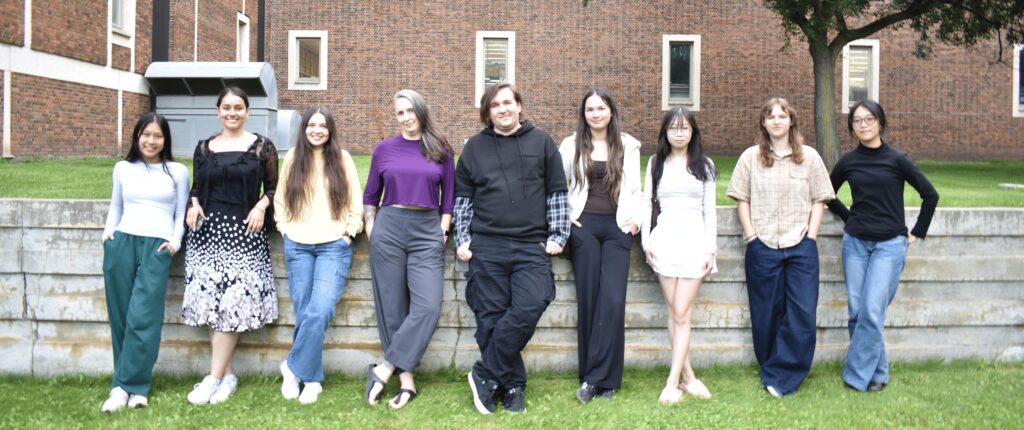
L-R: Brandon, Julia, Sofia, Sam, Tanishka, Mylie, Lauren (Ben & Cheska not pictured)

L-R: Cailtyn, Julia, Sofia, Simran, Lauren, Ben, Sam, Brandon (Walter not pictured)

L-R (back): Brandon, Julia, Francesca, Chandler
L-R (front): Caitlyn, Sofia, Lauren Walter, Simran, Ben, Sam

L-R: Julia, Lauren, Ben, Ayumi, Umama, Avery, Isabella, Brandon, Henry

L-R: Lauren, Stefan, Nicole, Ben, Brandon, Julia, Connor

L-R: Connor, Ben, Maryam, Priya, Julia, Lauren, Nakul, Andrés [Stefan not picured]

L-R Jessica, Cailyn, Stefan, Lauren, Ben, Julia, Connor [Andrés, Nicole & Harleen not pictured]

L work clockwise: Harleen, Lauren, Connor, Cailyn, Nicole, Ben, Sara, Jessica, Andres [Julia and Stefan not pictured]

L-R: Karen, Deborah, Anna, Sara, Andres (w/ Oli), Connor, Ben, Cailyn [Lauren and Julia not pictured]

Top L-R: Sara, Lauren, Liam, Cailyn, Jessica, Connor, Erfan, Andres, Ben [Gopika and Julia not pictured]

Top L-R: Connor, Lauren, Kalie, Sara, Cailyn, Gopika, Jessica, Julia, Andrés, Liam

Starting in foreground working clockwise: Kalie, Cailyn, Julia, Sara, Jessica, Andrés, Helen, Chelsea, Tristan, Gopika, Melinda, Connor

Top L-R: Erfan, Lauren, Kalie, Shaunak, Connor, Gopika, Liam, Christine, Andrés, Jessica, Tristan

Top L-R: LIam, Lauren, Christin, Shaunak, Gopika, Connor, Andrés, Tristan

Top L-R: Connor, Lauren, Andrés, Gopika, Tristan, Liam

Top L-R:Tristan, Maks, Andrés, Sim, Brianna, Lauren, Gopika, Maneet, Connor

Top L-R: Coral-lee, Lauren, Brittany, Connor, Andrés, Tristan

L-R: Andrés, Tristan, Lauren, Connor

L-R: Andrés, Lauren, Tristan, Connor